Best Home Equity Loan Lenders in the U.S. (2026) Compare Rates, Fees & Approval Requirements
Written by : javeed Dhillon, Mortgage Research Analyst (8+ years experience in U.S. housing & lending markets)
If you’re thinking about using your home’s equity, the lender you choose can make a bigger difference than you might expect.
Most people just look at the interest rate and move on. But in reality, things like fees, approval time, and repayment terms can impact you just as much — sometimes even more.
In this guide, we’ll go through some of the best home equity loan lenders in the U.S. for 2026, how they compare, and what actually matters when choosing one.
What Really Matters When Choosing a Lender
Before jumping into options, it helps to know what to focus on.
- The APR, not just the rate
- Any hidden fees or closing costs
- Credit score requirements
- Loan flexibility
- Approval speed
Many borrowers ignore everything except the rate — and that’s where they overpay.
Best Home Equity Loan Lenders (2026)
Discover Home Loans
- No application or origination fees
- Fixed rates
- Loan amounts up to ~$300,000
Best for people who want fewer upfront costs.
Bank of America
- Rate discounts for existing customers
- Strong online platform
- Nationwide coverage
Best if you already bank with them.
Wells Fargo
- Competitive rates for strong credit
- Large branch network
- Flexible options
Works well for borrowers with solid financial profiles.
PenFed Credit Union
- Lower APRs compared to many banks
- Flexible approval criteria
- Membership required
Good for reducing long-term interest costs.
Real Example (Important)
Let’s say a homeowner in Texas has:
- Home value: $350,000
- Mortgage balance: $220,000
They apply for a $50,000 home equity loan.
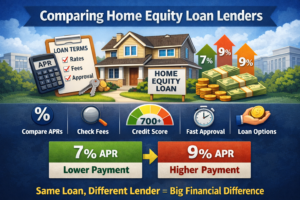
- With a 7% rate → lower monthly payment, less total cost
- With a 9% rate → higher payment, thousands more paid over time
👉 Same loan, different lender = big financial difference.
What Rates Look Like in 2026
Typical range:
- 6.5% – 9%
Better rates if:
- Credit score 700+
- Low debt-to-income ratio
Higher rates if:
- Lower credit score
- High existing debt
👉 Always compare APR, not just rate.
How We Chose These Lenders
We didn’t pick randomly. These lenders were selected based on:
- Competitive interest rates
- Transparent fees
- Customer experience
- Approval flexibility
- Industry reputation
This ensures the list reflects real-world borrowing conditions.
How to Choose the Right Lender
Step 1: Know your numbers
Check your credit score, income, and debts.
Step 2: Compare at least 3 lenders
Never go with just one offer.
Step 3: Focus on total cost
Look at APR, monthly payment, and fees.
Step 4: Match your goal
- Low fees → fewer upfront costs
- Low APR → cheaper long-term
- Convenience → existing bank
When This Loan Makes Sense
- You have 20%+ equity
- You need a fixed amount
- You want lower rates than credit cards
- Your income is stable
When to Avoid It
- Unstable income
- High existing debt
- Non-essential spending
👉 Your home is collateral — risk is real.
Common Mistakes
- Choosing based only on rate
- Borrowing maximum amount
- Ignoring fees
- Not comparing lenders
Quick Comparison
| Lender | Best For | Key Benefit |
| Discover | Low upfront cost | No fees |
| Bank of America | Existing users | Convenience |
| Wells Fargo | Strong credit | Better rates |
| PenFed | Budget focus | Lower APR |
What You Should Do Next
Before applying:
- Credit score ~680+
- DTI under control
- Enough equity
👉 Next step: Compare offers from at least 2–3 lenders.
Related Guides
- HELOC vs Home Equity Loan
- How Credit Score Affects Loan Rates
- Cash-Out Refinance Explained
About the Author
javeed Dhillon is a mortgage research analyst with over 8 years of experience studying U.S. lending markets, interest rate trends, and borrower behavior.
Disclaimer
This article is for informational purposes only and does not constitute financial, legal, or tax advice. Loan terms and rates may change. Always consult a qualified professional before making financial decisions.